Look beyond the down payment
Include financing, closing costs, property taxes, insurance, and maintenance so the plan reflects more than the purchase price.
Homes & property
A home changes your cash flow, your debt, and your future equity. See the full effect of buying, owning, renting out, or selling property.
See what’s possible
Give a potential home or rental property its own assumptions, then follow the effect on cash, investments, and net worth.
Read the detailed guideInclude financing, closing costs, property taxes, insurance, and maintenance so the plan reflects more than the purchase price.
Follow mortgage payments, appreciation, and equity over time. Schedule a sale and see how its proceeds enter the rest of the plan.
Model rental income and carrying costs alongside your other income, accounts, and living expenses.
Explore the details
A property’s headline value is only part of the balance sheet. Its remaining mortgage affects equity, cash commitments, and what a sale could release. The Debt view keeps that liability visible alongside other borrowing, making the payoff year and the years of overlapping repayments easy to identify.
From a question to a clearer picture
Give each property its own card so its financing, running costs, rental income, and sale assumptions remain connected to the rest of the household.
Choose whether it is already owned or a future purchase. Enter its location, current value, and relevant cost basis, then specify whether it is a primary home or earns rent.
Set the mortgage or purchase financing and include closing costs. Add property taxes, maintenance, insurance, and other supported carrying costs with their own assumptions about change over time.
Follow payments and ownership costs in cash flow while checking value and debt separately. If the plan includes a sale, inspect its timing, remaining mortgage, estimated taxes, and selling costs.
Connect the whole plan
A mortgage payment is one of several costs a property adds to the year. The flow view places financing, property taxes, and upkeep beside the household’s other commitments. This makes it easier to understand how owning the home affects cash available for living costs and investing.
One way to use it · illustrative scenario
Imagine an owner who wants to compare keeping a rental property with selling it several years before retirement.
Try an example planThey retain the same property, mortgage, and rent assumptions, then use What-If to add a sale date and review the sale-cost inputs.
They compare rental cash flow before the sale, the amount entering the plan when it is sold, and the subsequent account balances. The property’s gross value and the cash available after the sale are read separately.
The comparison connects the rental’s annual income with the cash a sale could release and the investments that would replace it. The result follows the assumptions entered for each path.
Make sense of what you see
The settings shown in the screenshot identify the individual property and its tax assumptions. Multiple properties can carry different values, loans, locations, and costs within the same plan.
A property can contribute to net worth while still requiring cash for its mortgage and upkeep. Read the debt balance and annual cash flow beside its projected value.
The rental amount is gross annual rent. The property’s financing, carrying costs, and modeled tax treatment determine how that rent contributes to the wider household forecast.
A little more detail
Yes. A future purchase includes timing, price, down payment, closing costs, and financing. The model records the purchase at the start of the named year; a scheduled sale takes place at the end of its year.
No. Supported ownership costs can be entered as dollar amounts or a share of value, with controls for how they change. This lets a fixed annual estimate follow a different path from a cost tied to appreciation.
It estimates sale consequences using the property inputs and supported tax rules, including applicable primary-home or rental treatment. Selling costs and remaining debt also affect proceeds. It does not prepare a closing statement or replace the property’s tax records.
Keep exploring
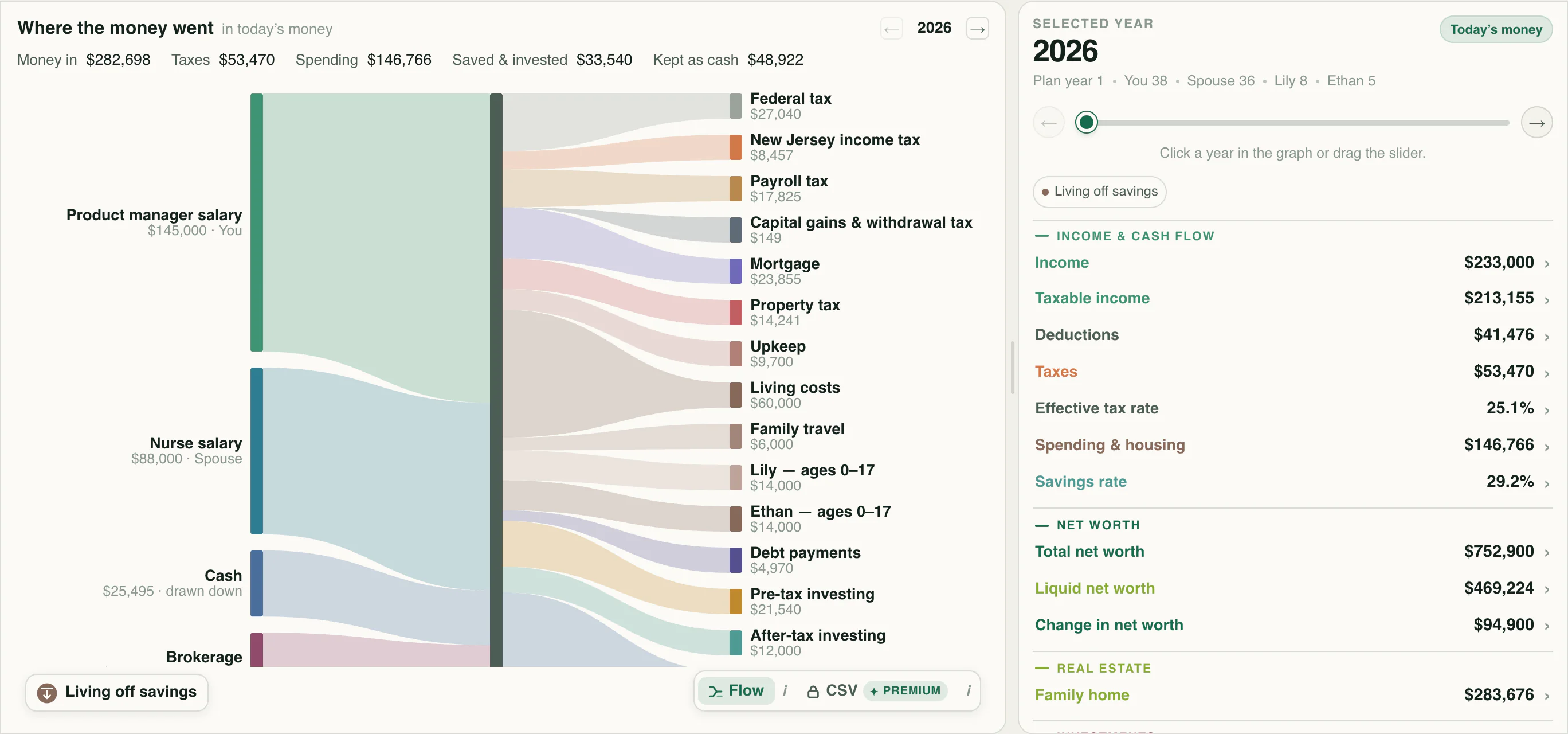
Plan household cash flow across working years and retirement. Trace income into taxes, living costs, investments, and the cash you keep.
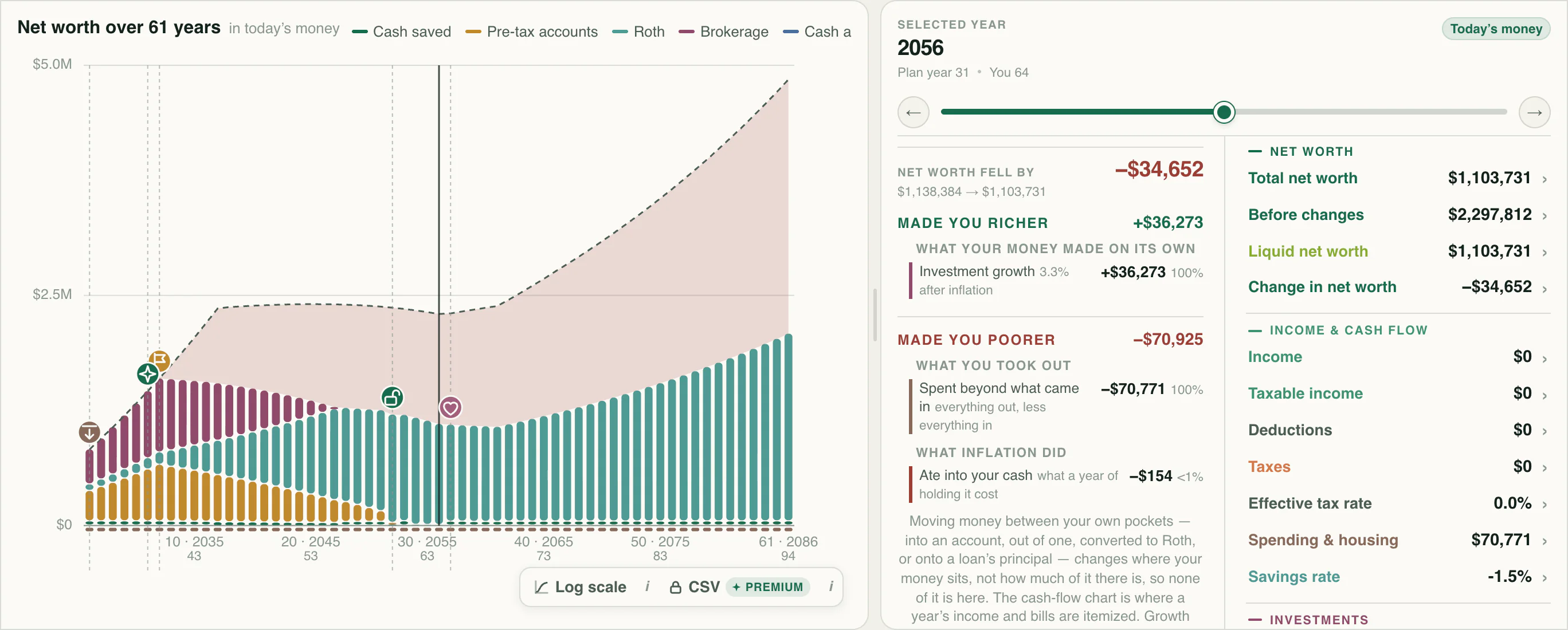
Compare financial planning scenarios for retirement dates, saving rates, career changes, and home purchases against your original forecast.
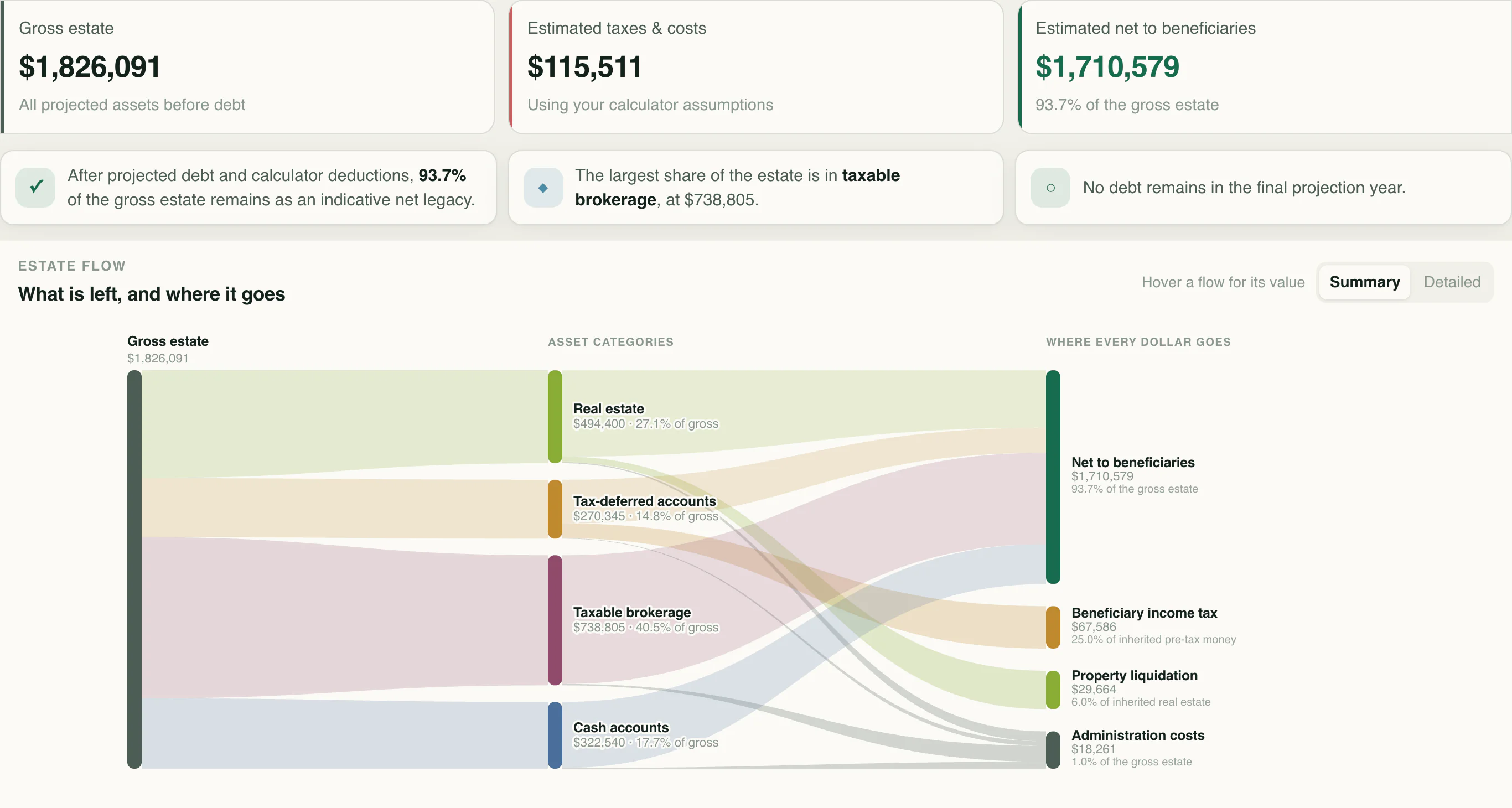
Follow projected assets through debts, estimated taxes, and estate costs to the legacy left behind.
Know the language
Your next chapter
Start with your numbers. See where they could lead.