Understand the annual rhythm
See income and outflows across the whole plan, including the years a purchase or retirement changes the pattern.
Cash flow planning
See where your money comes from, where it goes, and what stays with you. Move from a lifetime overview to the flow of a single year.
See what’s possible
Follow working years into retirement and see when income covers the year, when savings take over, and where shortfalls appear.
Read the detailed guideSee income and outflows across the whole plan, including the years a purchase or retirement changes the pattern.
Open the money-flow diagram to connect individual sources of income with taxes, living costs, investment contributions, and cash.
Model cash reserves and surplus priorities, then explore how withdrawal order funds years that need more than they earn.
Explore the details
A positive cash-flow year is the start of another decision. Keep a reserve, save to an account, direct money toward debt, or invest what remains. The reserve can follow months of household outgoings, so the cash cushion responds to the costs already modeled in the plan.
From a question to a clearer picture
The cash-flow chart and money-flow diagram are two readings of the same projection: what the household receives, what it needs to pay, and how the gap is handled.
Enter income streams, spending, account contributions, property, and debt. Set cash reserves and surplus priorities, along with the order the plan uses when income alone does not cover a year.
Choose Cash flow in the chart picker and scan the annual inflows and outflows. Click a year around a retirement, purchase, or other change to pin its detailed ledger.
Turn on Flow to trace that selected year from its sources into taxes, housing, living costs, investments, and remaining cash. Return to the lifetime chart to place the year in context.
Connect the whole plan
Working years can build the balances that later support retirement. The lifetime cash-flow chart makes that handover visible without losing the annual detail. Following account additions alongside later withdrawals helps explain how an earlier saving choice changes the resources available when earned income becomes smaller.
One way to use it · illustrative scenario
Imagine a household considering a home purchase three years from now while continuing to earn their current salaries.
Try an example planThey add the proposed purchase, financing, closing costs, and ownership costs, then compare the forecast with their starting plan.
They pin the purchase year to trace the cash required and any account withdrawals, then inspect the following year to separate the one-time purchase from ongoing payments. They also check what happens to planned saving.
The comparison separates a one-time purchase from its continuing costs and shows what happens to planned saving when the same income must fund a different set of commitments.
Make sense of what you see
Its connections show where money comes from and where it goes in that year. The lifetime bar chart shows how that pattern changes across the whole horizon.
Moving cash into an investment account appears in the funding story, but the transfer itself does not create wealth. Use net worth alongside cash flow to distinguish saving movements from growth.
A withdrawal that funds spending may also create taxes requiring funding. The settled ledger incorporates that interaction, so the amount drawn can exceed the original spending gap.
A little more detail
Cash-flow settings determine the reserve and surplus priorities the plan follows. Depending on those choices, leftover money can remain as cash, fund investments, or pay down debt. The chart shows the outcome of those configured instructions.
The model follows the configured funding and selling order, including supported account withdrawals and property sales. If the available resources still cannot meet the need, the projection records a shortfall rather than assuming additional income arrives.
No. This view projects annual flows from the plan’s assumptions. It is a forecast, not a record of individual purchases, deposits, or bank transactions.
Keep exploring
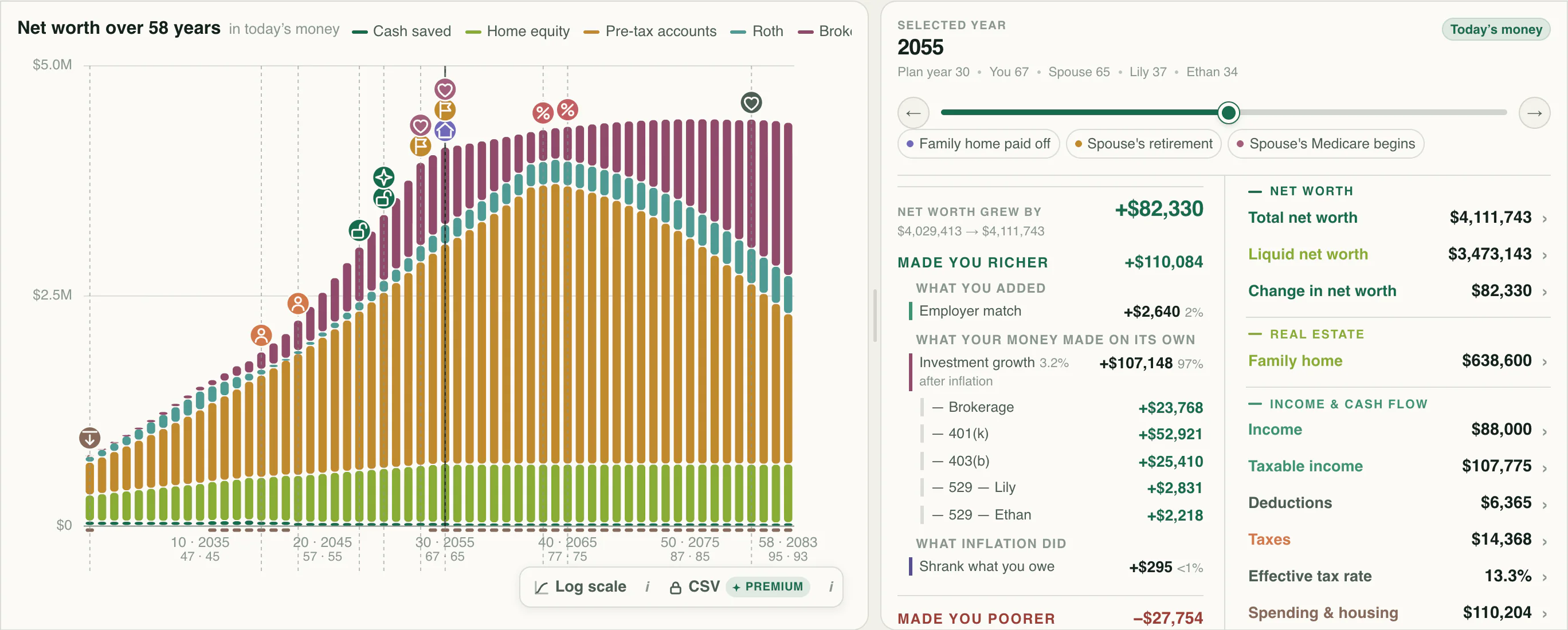
Financial planning software to project income, spending, taxes, investments, and net worth year by year, then compare the choices that shape your future.
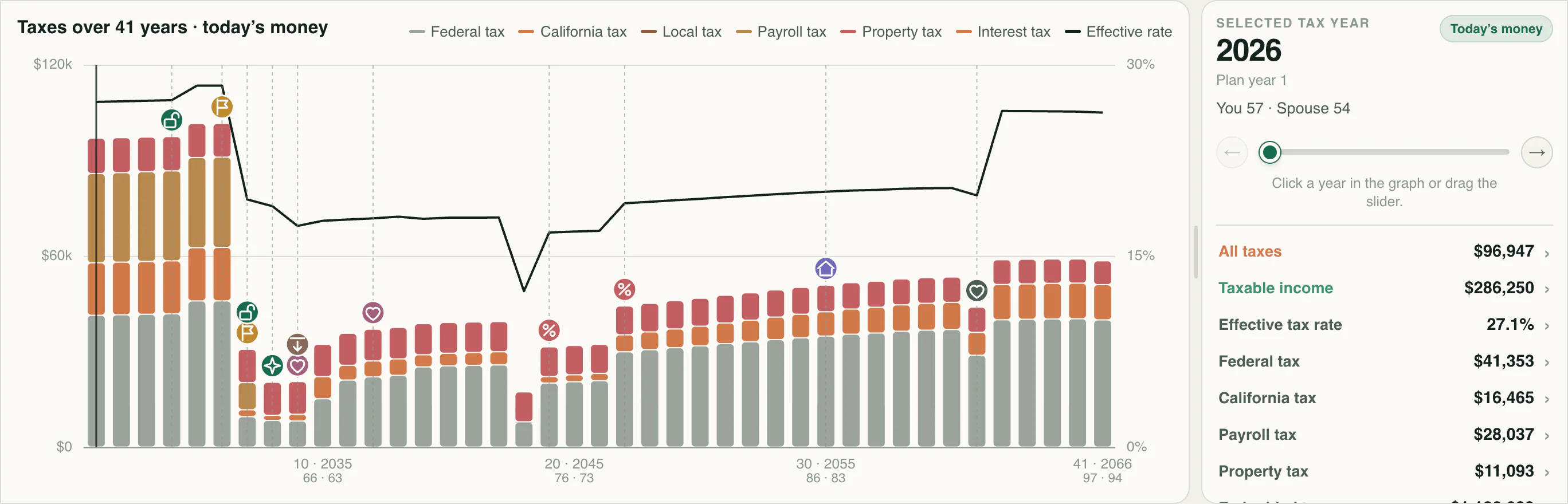
Explore estimated lifetime taxes and inspect the income, rates, and deductions behind each year.
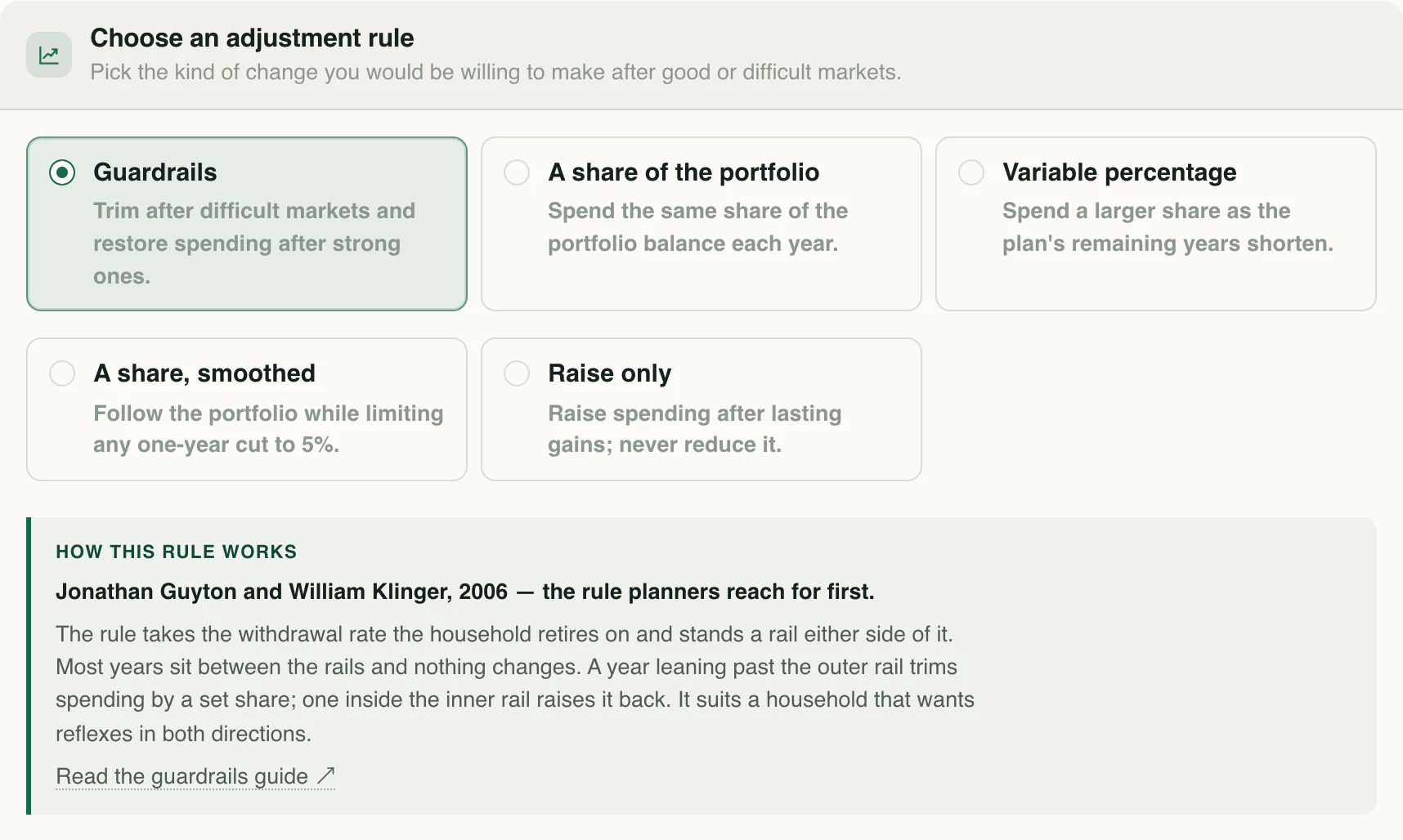
Compare retirement withdrawal strategies, including guardrails and variable percentage withdrawals, and see how spending responds to your portfolio.
Know the language
Your next chapter
Start with your numbers. See where they could lead.