Make room for a changing career
Model separate income streams, raises, pensions, and a transition out of work. Set when each starts and ends.
Life & family planning
Careers change. Families grow. Priorities move. Give your real-life milestones a place in the forecast, and see the financial story around them.
See what’s possible
Explore the cost of a career break, a growing family, or a new chapter without losing sight of your longer-term plans.
Read the detailed guideModel separate income streams, raises, pensions, and a transition out of work. Set when each starts and ends.
Bring a partner, children, education costs, and changing household expenses into the picture.
Place purchases, retirement, and other milestones along your timeline. See how their timing changes savings and spending.
Explore the details
Family spending rarely follows one flat amount from birth through college. Separate cost stages let the plan reflect changing needs, timing, and funding accounts. The resulting cash-flow pattern makes it easier to see whether education overlaps with retirement, a mortgage, or another expensive chapter.
From a question to a clearer picture
The scenario picker gives familiar questions a starting point. The underlying income, spending, account, and property entries remain available to inspect and refine.
Enter the household, current income streams, and existing commitments. For a child already here, use their birth year so the projection starts with the costs still ahead.
Open a scenario such as a career break, one income, a child, or a home purchase. Fill in its dates and amounts, then try the scenario as a What-If comparison.
Inspect the affected years, then follow the longer path of savings and withdrawals. Refine individual entries when your situation needs more detail than the initial scenario asks for.
Connect the whole plan
A milestone can be a fixed age, a calendar year, or a financial condition the projection has to reach. Connect another entry’s timing to that milestone and the two move together. Separate retirement dates let each person’s working years have their own place in the household plan.
One way to use it · illustrative scenario
Imagine a parent considering a year away from work before returning to a different job.
Try an example planThey use the career-break scenario to specify the job’s end, any temporary support they want modeled, and the timing and amount of replacement income.
They examine the year without a salary, the return-to-work year, and the account balances after both. They also review contribution changes and any spending assumptions that need updating.
The comparison shows which parts of the plan carry the transition, how much saving pauses, and what the return-to-work assumptions contribute to the longer-term picture.
Make sense of what you see
The picker separates retirement timing, career interruptions, household income changes, children, housing, and market shocks. Choose the question that matches the decision you want to investigate.
A child’s costs can change across age ranges instead of remaining one flat annual amount. Each stage can have its own expense, growth assumptions, and chosen funding accounts.
A milestone may simply mark the first year a condition is met. When an income, purchase, or retirement depends on it, the milestone’s timing also changes that part of the projection.
A little more detail
No. You can edit income, spending, investments, and property directly. Scenarios group related changes into one form; they do not replace the ordinary plan entries or prevent later adjustments.
Yes. A child’s cost stages can name funding accounts, including a 529 for college years. If the chosen accounts cannot cover a stage, the remaining need falls back to the plan’s usual funding order.
Choosing another life scenario rebuilds the comparison from the original plan and replaces the active scenario, including its manual What-If edits. Keep a version you want to retain before replacing it. An account keeps up to two saved plans.
Keep exploring
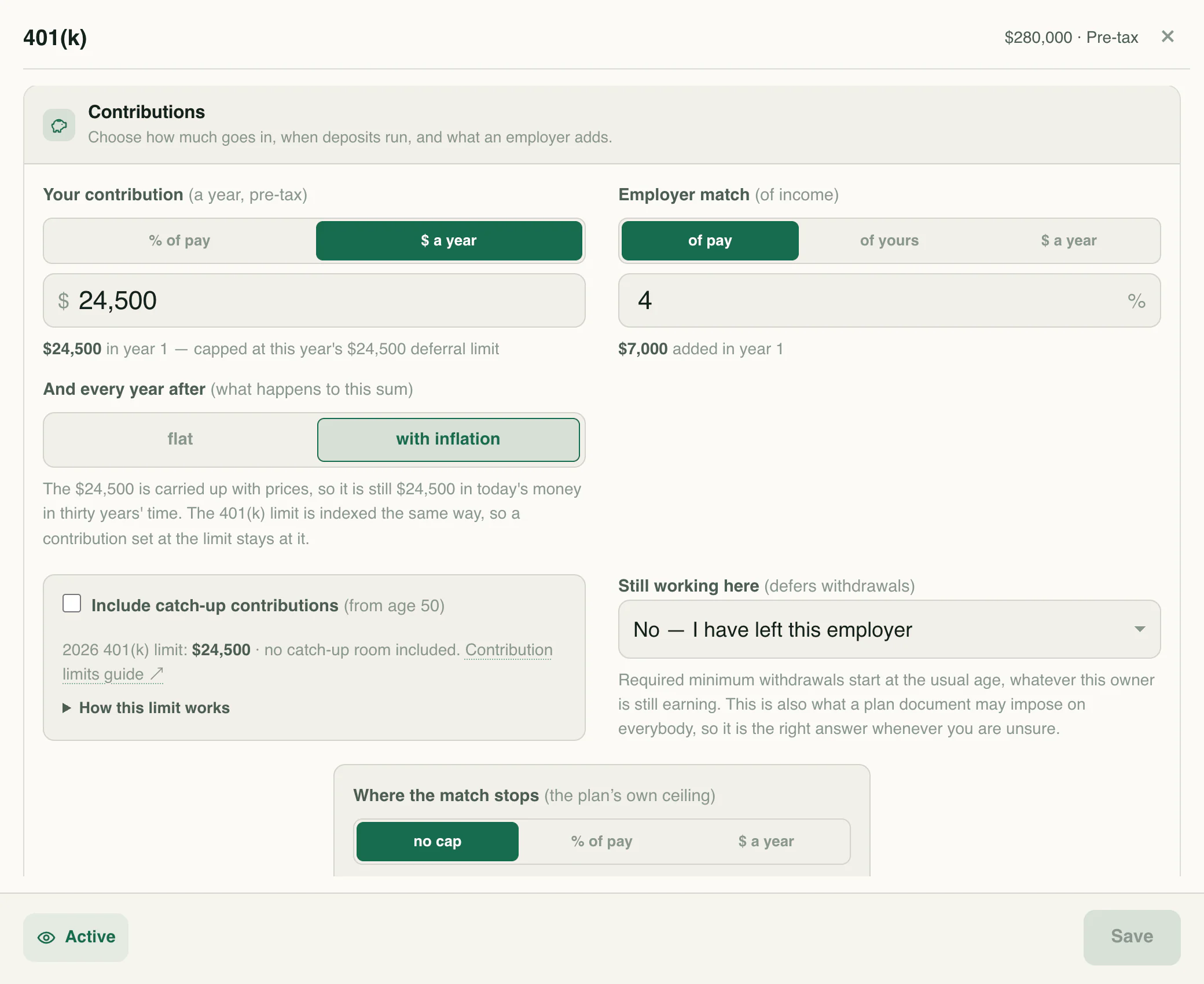
Explore retirement dates, 401(k) contributions, Social Security, and withdrawals with retirement planning software that connects saving to income after work.
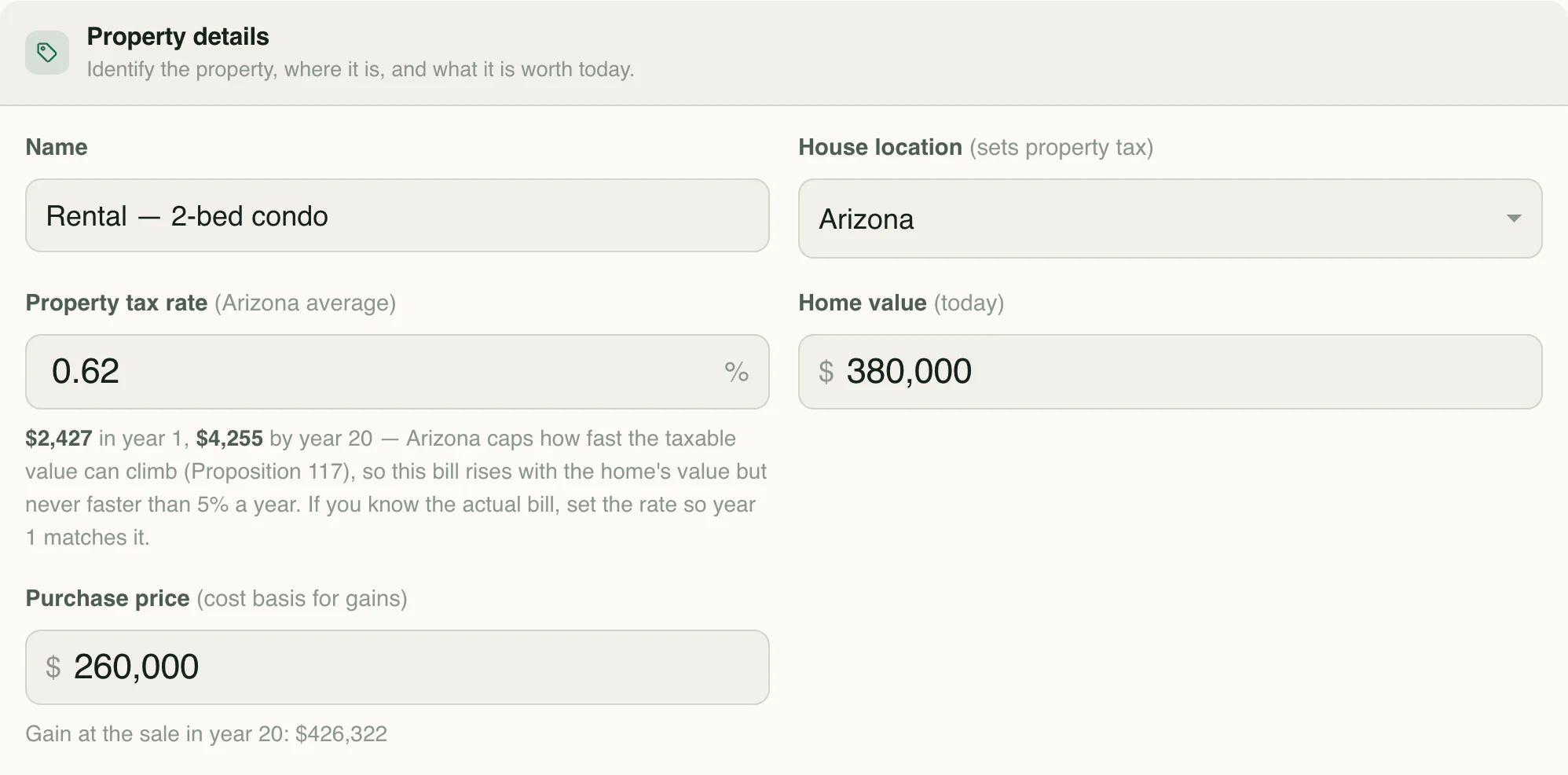
Model buying a home, rental property income, mortgages, and selling costs to see how real estate changes cash flow and long-term net worth.
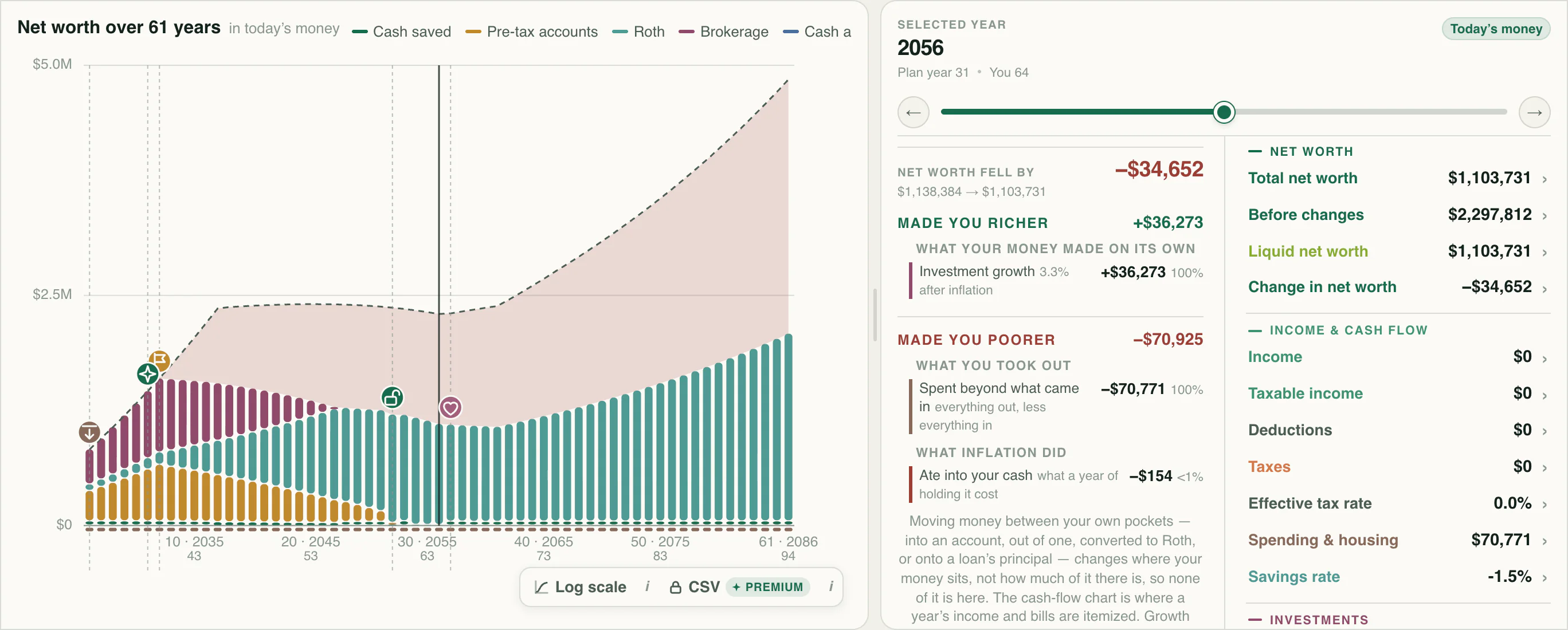
Compare financial planning scenarios for retirement dates, saving rates, career changes, and home purchases against your original forecast.
Know the language
Your next chapter
Start with your numbers. See where they could lead.